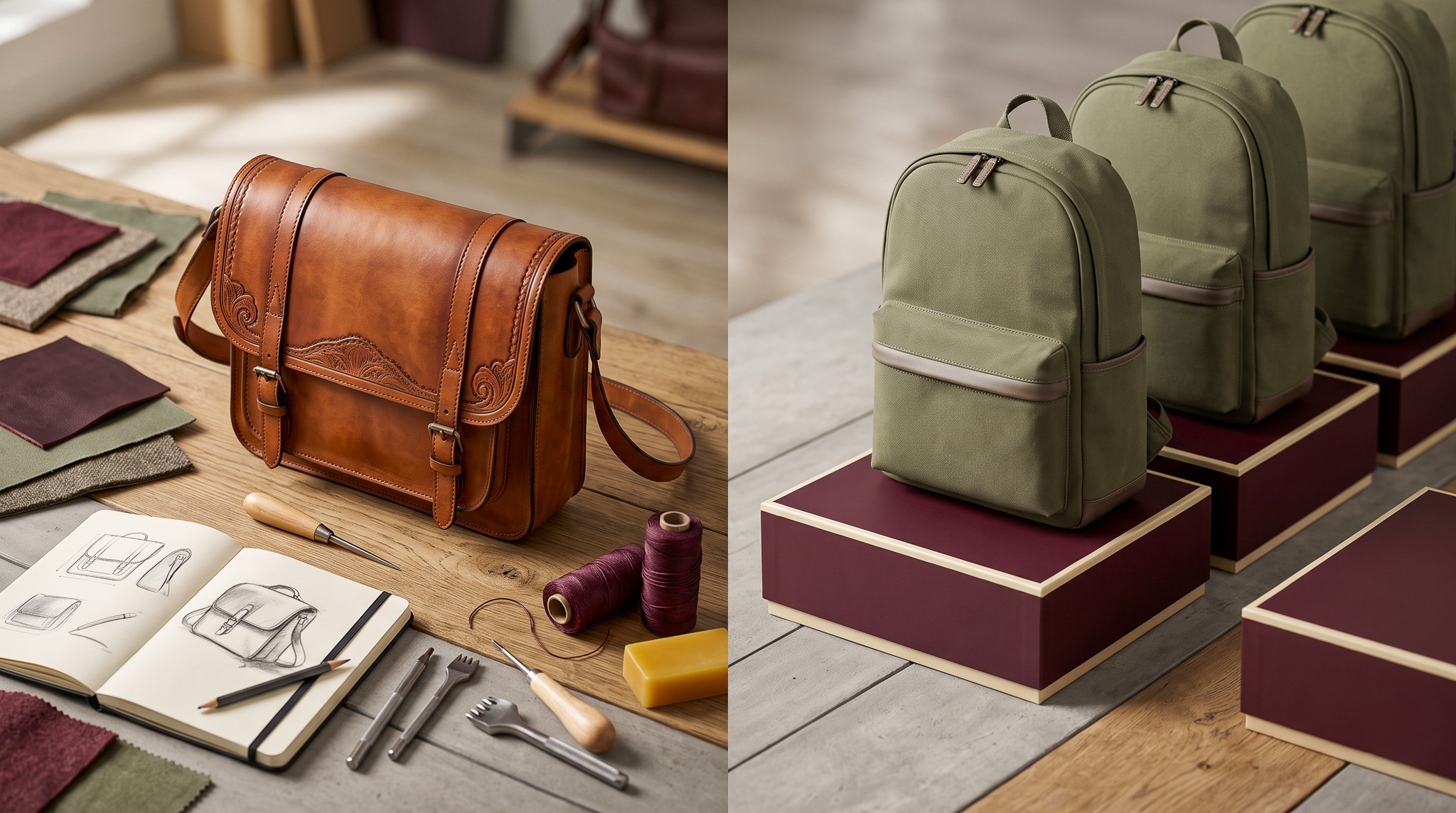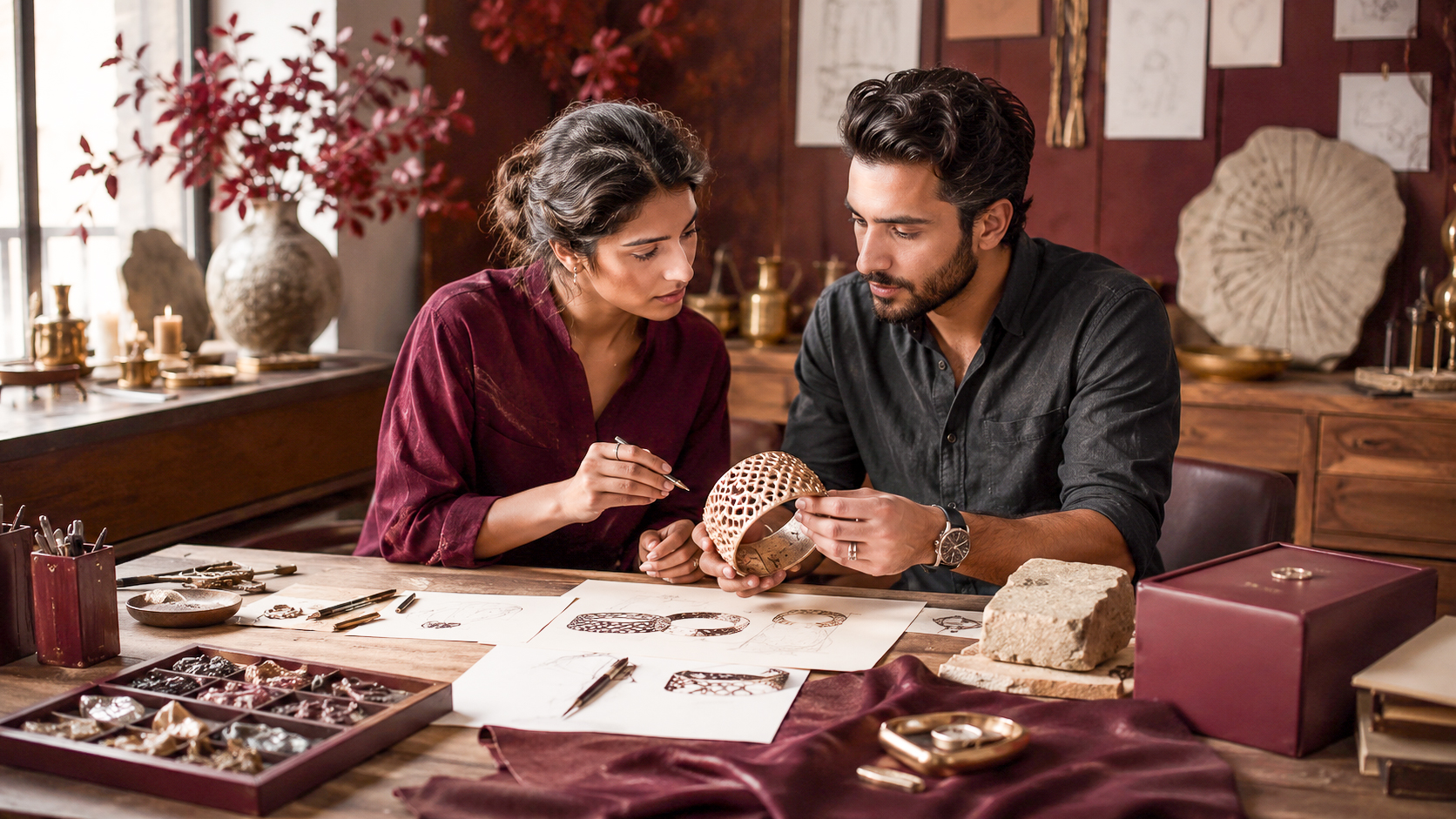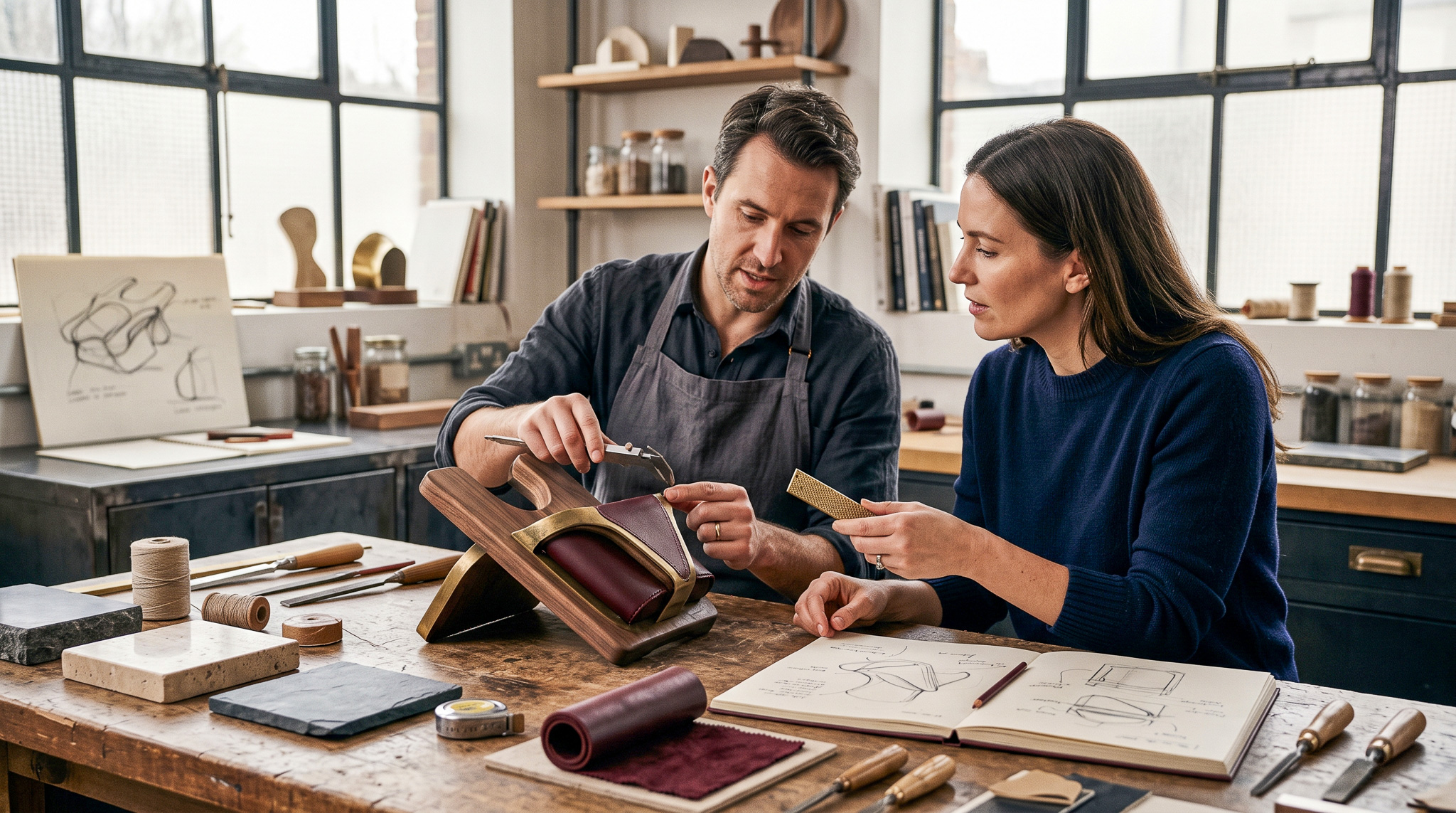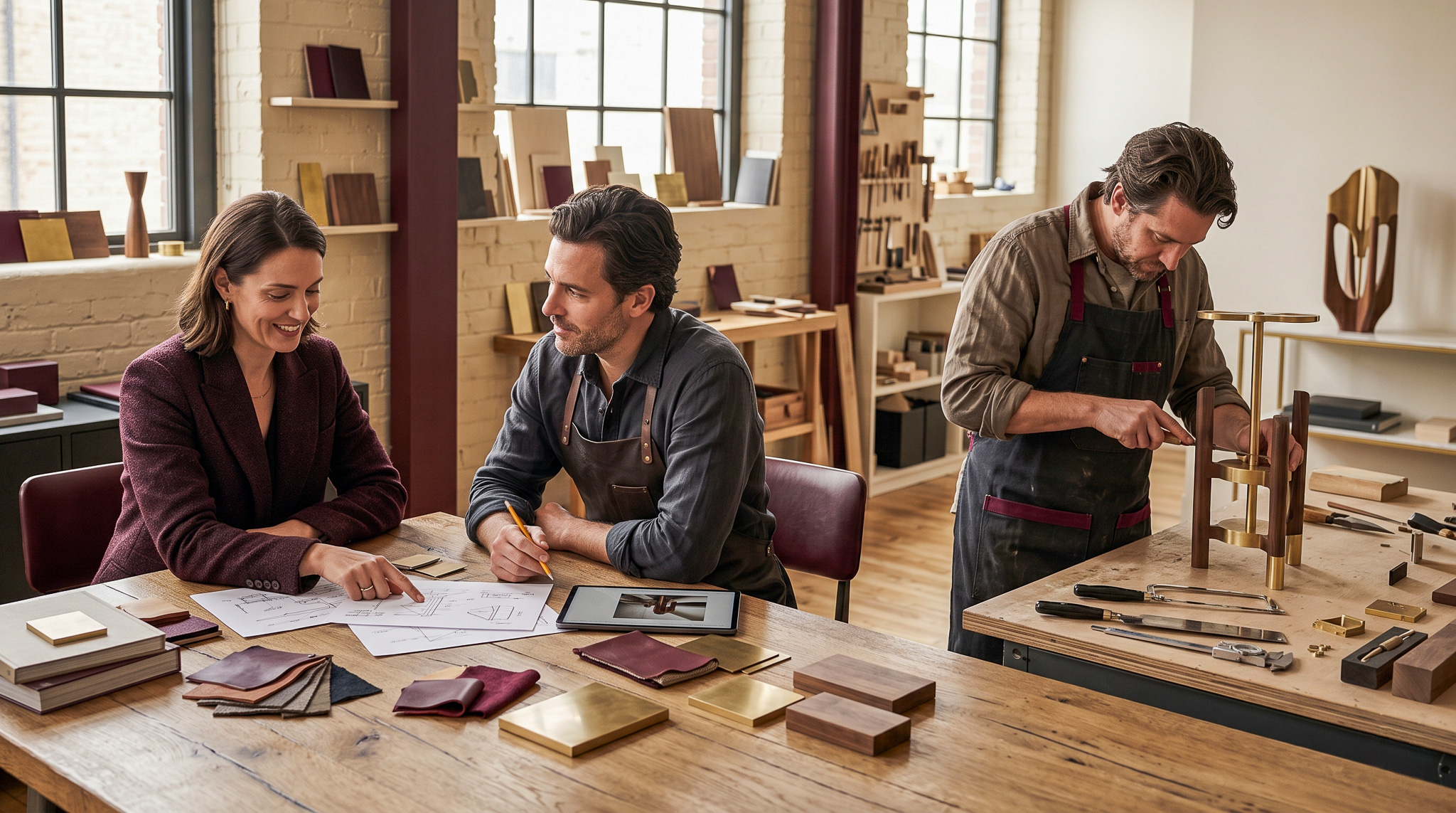
There's a story behind every object that lasts forever. Not a tagline. Not a marketing angle but an actual story. And here's the one with three voices, three sets of hands, three kinds of knowing.
At Takshila, we call this a co-fabrication process. It isn't a workflow or a supply chain dressed up nicely. It's the way things get made when you refuse to separate meaning from material.
As people become more interested in where products come from and who made them, the act of making a product itself is becoming part of an object's value. As we saw in the marketplace, most of the products are made by people. Someone decides. The other one executes. And the customer buys. That's three transactions without any conversation.
What Takshila does is different. And that difference starts with understanding who those three people actually are.
Key Takeaways
- Takshila's co-fabrication process brings three people together: the artisan, the designer, and the customer to co-create something meaningful.
- Every product carries a real story, shaped by knowledgeable craft, creative collaboration, and personal ownership.
- At Takshila, the co-creation process is transparent, intentional, and focused on creating objects that are made to last, not just to be sold.
The First Person Who Holds the Knowledge
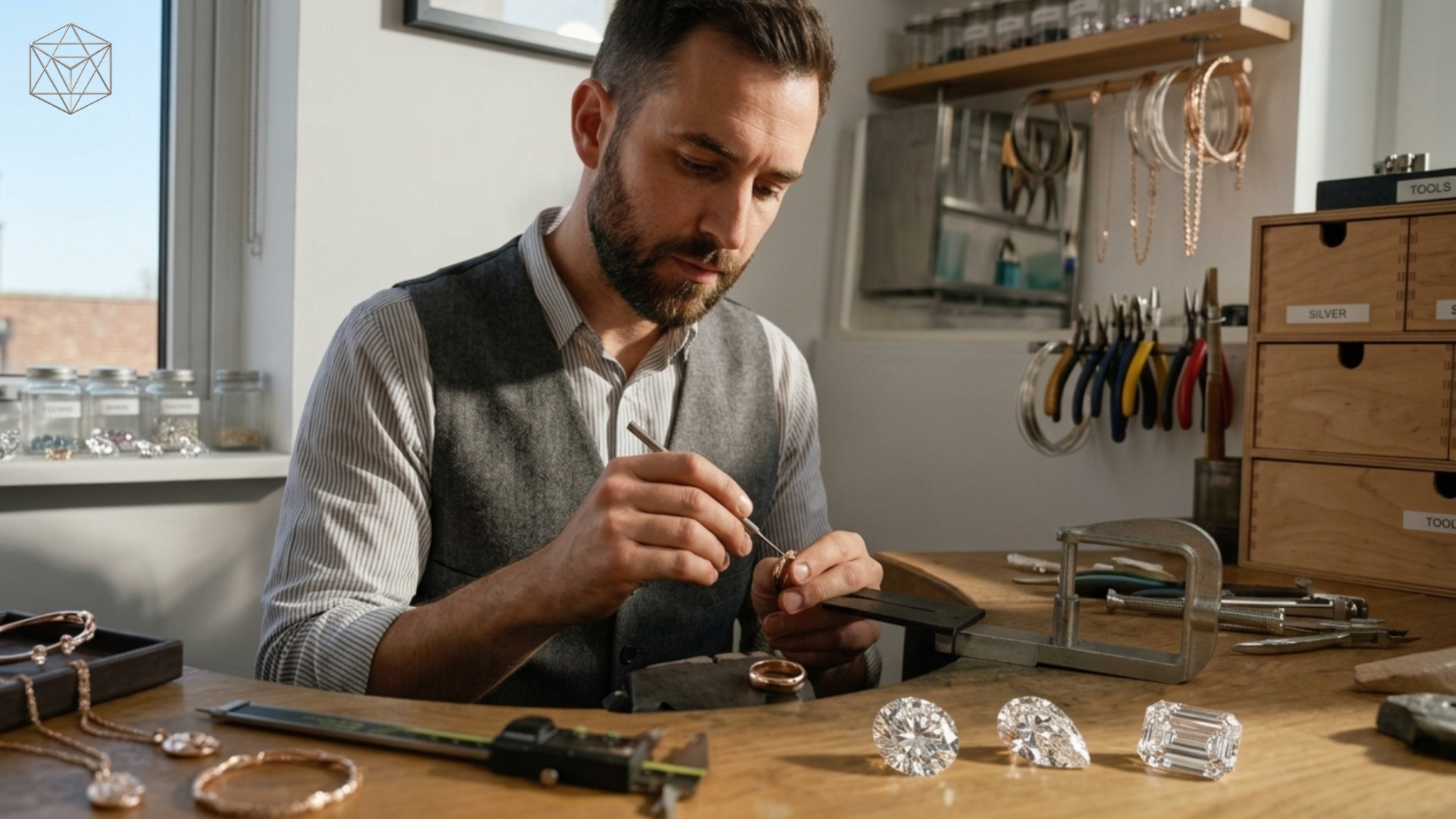
Before the product, there is a person who has spent years, sometimes a lifetime, learning about how a material behaves.
The skilled artisan is not a pair of hands waiting for instruction. They are the heroes for us.
- They know how the loom behaves early in the morning.
- They understand how clay changes when the air is dry.
- They know exactly where a thread might break.
- They also know how far they can push a material before it becomes something truly extraordinary.
In most craft-based brands, this person is invisible. Named in a footnote. Most thanks to him in the caption. But in the co-fabrication process, they are the foundation, the one who sets the terms of what is even possible. This is not romanticisation. It's accuracy.
McKinsey's research shows that organizations investing in people, skills, and knowledge outperform peers through greater resilience, stronger retention, and more consistent performance. In craft, where value is carried by human expertise, the impact of investing in knowledge is even more visible across every stage of creation.
When you work with a skilled artisan, their experience brings the material to life. This is something that neither speed nor mass production can ever copy.
The artisan doesn't just create the product; they bring our story to life with their skill, passion, and craftsmanship. If you'd like to experience this firsthand, explore our Artisan Page and meet the talented artisans behind our creations.
And if you have the same craftsmanship and expertise, apply as an artisan through that Page and get rewarded with competitive pay for your skills and knowledge.
The Second Person Who Asks Questions
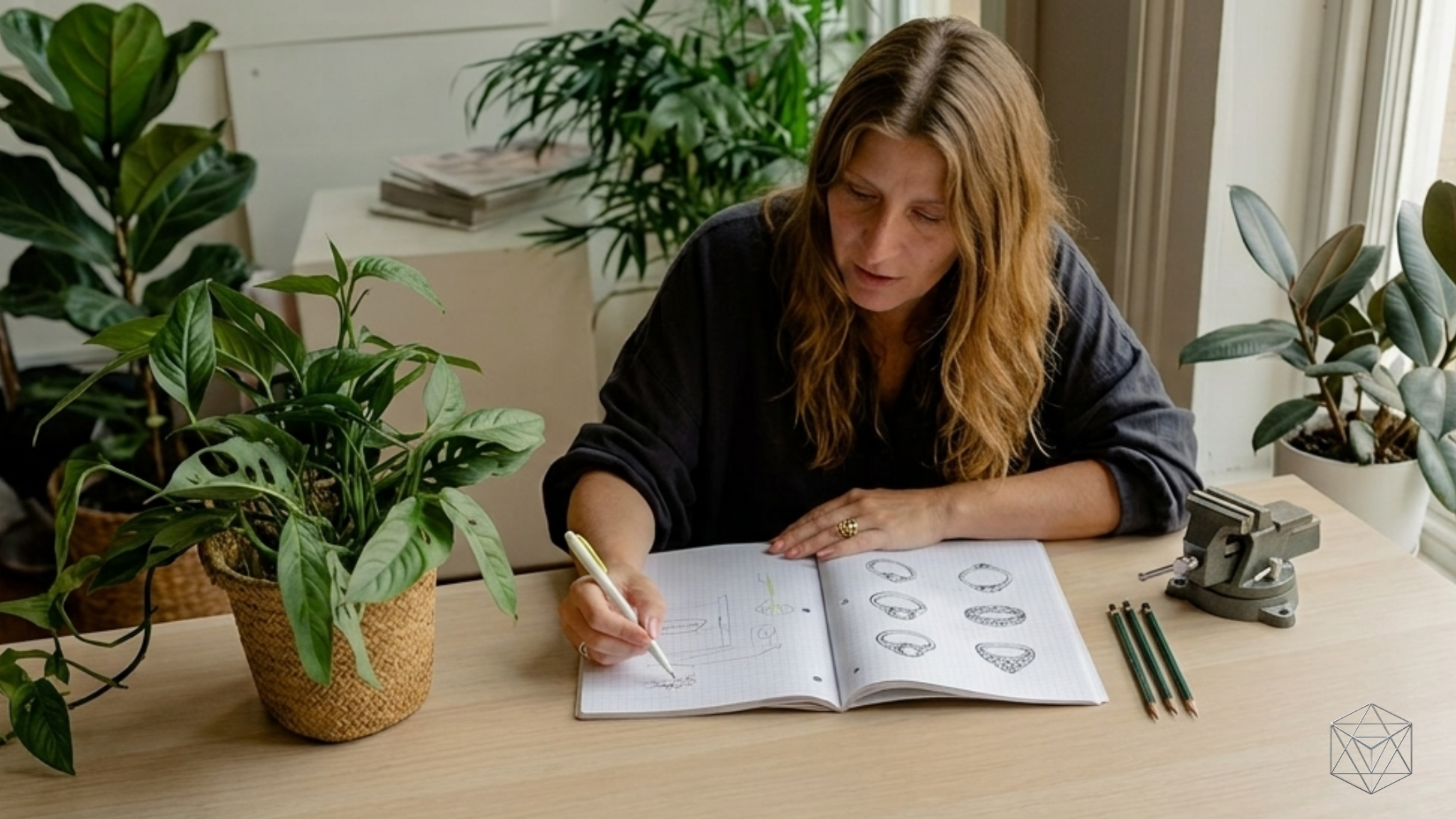
The designer enters the process not with answers, but with curiosity.
Good design in handcrafted products is not decoration applied over craft. It is a long conversation. Sometimes it looks uncomfortable, like what a thing should do, who it should serve, and what it should refuse to be. But the truth is, designers are also part of it because they bring ideas and creativity.
The designer in the customer relationship is not just following trends. They watch the artisan's moves, understand their process, and respect what they want to protect. They find a way for modern needs and traditional craftsmanship to work together without losing either one.
This work is often invisible. It includes many discussions, failed samples, and moments when someone says, "Not this way," for a good reason. The intentional design that comes from this process reflects those careful decisions.
Harvard Business Review has argued that meaningful collaboration is not about who has more authority or making everyone agree. It is about listening to each other, sharing ideas openly, and working together.
This is what we mean when we talk about designing something irreplaceable; it isn't a feature. It's a commitment to the process that makes the object worth owning in the first place.
The designer doesn't bring the vision. They bring the questions that make the artisan's vision legible to the world.
The Third Person With Story
The third person is you.
Not as a customer in the transactional sense, but as someone who carries their own story. When you bring your piece into your home or onto your body, you are doing the final act of the co-fabrication process. The object becomes yours not just legally, but narratively.
This is the part of conscious product development that most brands don't talk about: a product's journey doesn't end when it is made or purchased. It becomes complete only when it enters someone's life and is used with intention. Through everyday use, small choices, and lived experience, ownership becomes something deeper than consumption.
The authentic product story doesn't end at the point of sale. It begins there.
Studies on conscious consumption consistently find that people value objects differently when they understand their origin. They use them longer, care for them more intentionally, and replace them less often. That is why knowing you are the third person in this process matters.
You are not just buying a product here; you become part of your own product story.
- You are a participant in the creation journey.
- You start noticing the small details, like how the texture changes after the first wash.
- You see how the product looks and feels different in different lights.
- These details make your connection with the product stronger.
- Every small detail reflects the care, skill, and human craft behind it.
How the Co-fabrication Process Works in Practice?
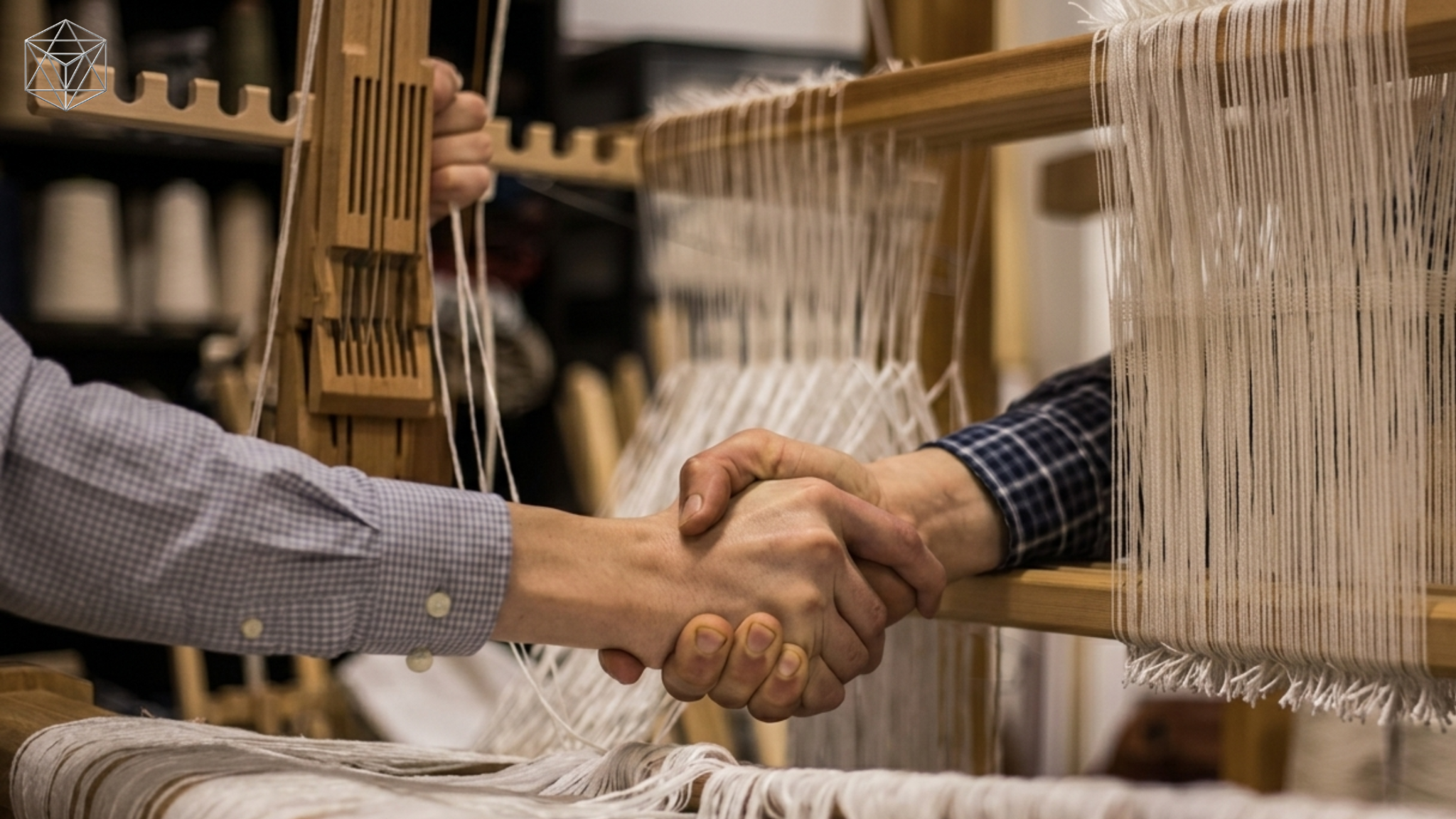
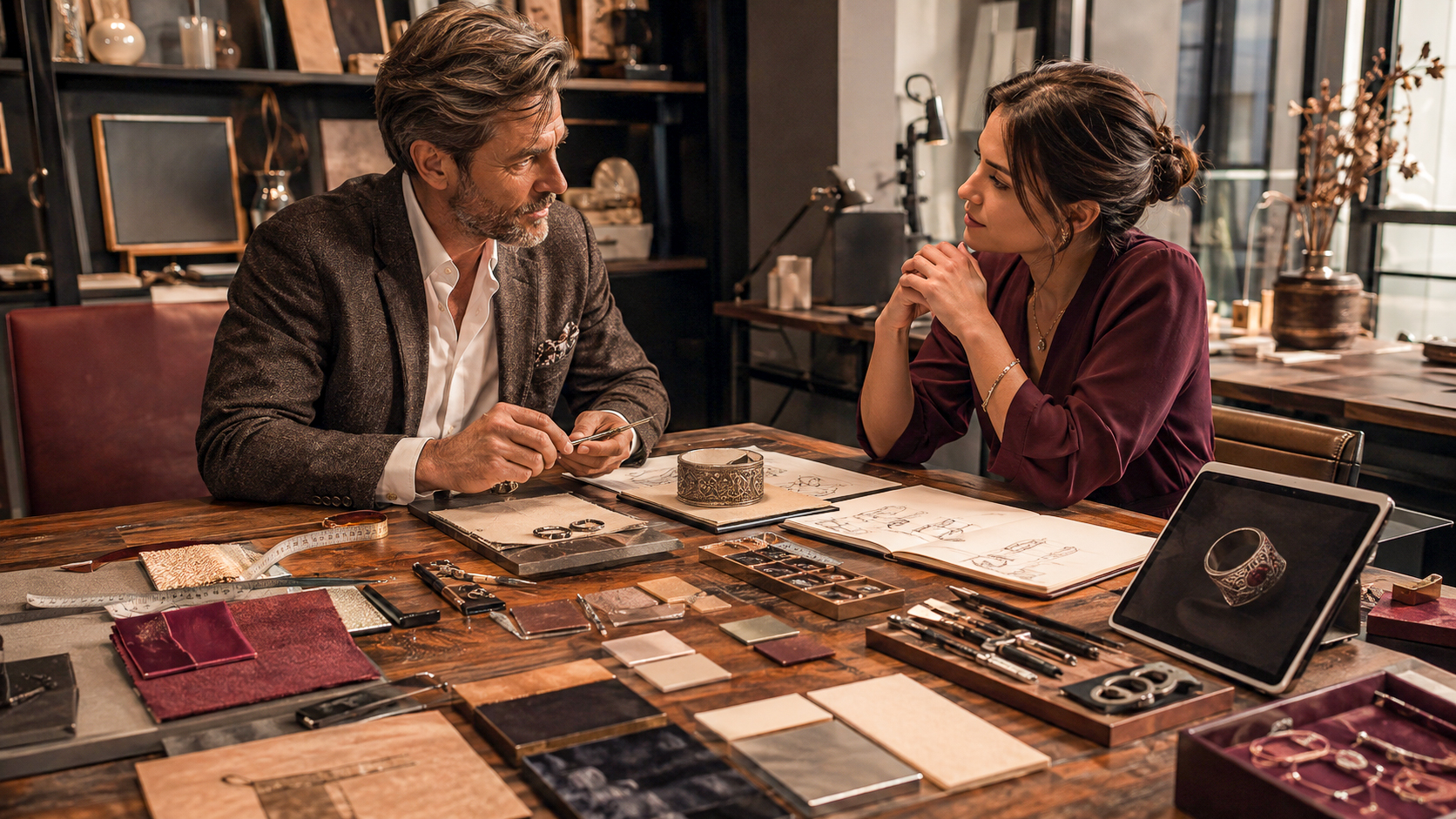
Co-fabrication work in Takshila starts with a conversation, not a product. The process begins when a customer shares their idea, inspiration, or personal story. Our AI-design tool transforms those ideas into an initial design and helps the customer choose the right materials.
Then a designer enters as a collaborator to carefully review both the design and the customer's story. Instead of simply editing the design, they suggest thoughtful improvements that make it more meaningful, functional, and true to the customer's vision.
This stage is built on co-creation, where the customer and designer work together until the design feels complete.
Once the design is finalized, the designer collaborates with a skilled artisan. The artisan uses their knowledge and craftsmanship to bring the story to life, making every detail visible in the final piece.
Throughout the process, transparency is maintained so the customer understands how the product is being created. Every contributor receives proper authorship, recognizing the value of their work.
The result is an ethical product that reflects the combined creativity of the customer, designer, and artisan—not just something made, but something truly co-created.
Why Three, and Not One
You might ask why it is complicated. Why not a single designer who also makes? Or a brand that controls everything?
Because collaboration between these three cannot be collapsed into a single ego without losing what makes it real. The artisan's knowledge is irreplaceable by the designer's vision. The designer's questions are irreplaceable by the artisan's intuition. And the user's life, the way they carry the object into contexts no brief could predict, is irreplaceable.
Three people behind every product isn't a creepy idea. It's a structural truth. Remove any one of them, and you don't have a simpler product. You have a lesser one.
Slow making is not about pace. It's about the presence of all three voices throughout the process, held in tension, never resolving into someone else's convenience.
Read is our philosophy, the belief that runs through everything we do
Conclusion
Every time you choose an object made this way, remember that you are doing something that matters more than the object itself. You help carry generations of craft knowledge into the present. In doing so, you ensure these stories, skills, and traditions continue to have a place in the world.
You are the third person, and without you, the co-fabrication is incomplete. At Takshila, every piece carries all three voices. We wouldn't have it any other way.
Ready to stop being a bystander to what you own? Sign up on Takshila to create your story with us and become the third person in something made to last.
FAQs
1. What is co-fabrication?
Co-fabrication is a collaborative process where artisans, designers, and customers collaborate with each other to co-create a custom-made product.
2. How does Takshila's co-fabrication process work?
Takshila connects customers, designers, and artisans throughout the custom creation journey, from idea to finished product.
3. Who are the three people involved in co-fabrication?
The artisan, the designer, and the customer each play a key role in co-creating the final product.
4. How is co-fabrication different from traditional manufacturing?
Traditional manufacturing separates makers and buyers, while co-fabrication brings them together in one transparent process.
5. Is co-fabrication the same as customization?
No. Customization lets you choose from existing options, while co-fabrication lets you participate in creating the product itself.