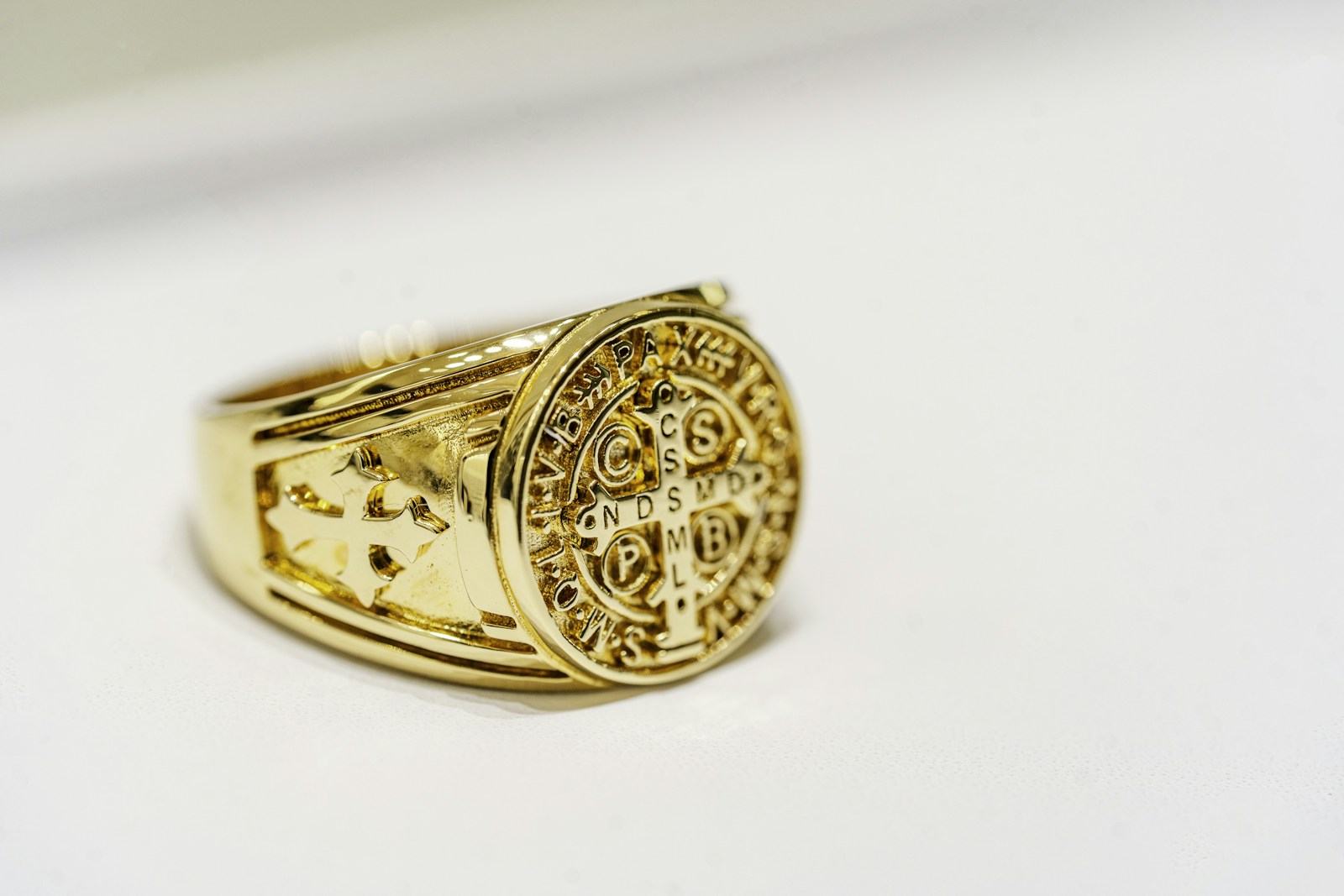
What if you could work directly with a skilled artisan and watch your idea become a real product? What if the jewellery you wear was not something you simply bought, but something you helped create from the very beginning?
For most people, shopping follows a simple process: browse, choose, and buy. You select from products that already exist. But today, there is another way.
At Takshila, you become part of the product creation journey. The platform connects you directly with designers and artisans and allows you to take part in true co-creation. Instead of choosing from a list of options, you can share your ideas, preferences, and story while skilled makers bring your vision to life.
This blog walks you through exactly how to co-create a custom-made product from your first spark of inspiration to the moment your one-of-a-kind piece arrives at your door.
Key Takeaways
- Takshila lets you co-create your product by working directly with designers and skilled artisans from start to finish.
- You stay involved in every step, from sharing your idea to approving the final product before delivery.
- Every product comes with transparent pricing, verified materials, and a complete record of who designed and made it.
- Co-creation gives you a unique product that reflects your story, not something chosen from a ready-made collection.
What Is Takshila?
Takshila is the world's first peer-to-peer co-fabrication platform. In this digital space, buyers, designers, and artisans connect directly to build custom-made products together, without any middlemen in the way.
Named after the ancient Indian centre of learning, Takshila is built on a simple belief: that the people who make things deserve to be known, and the people who buy things deserve to be involved.
Launching initially with jewellery, the platform is expanding into textiles, furniture, handicrafts, and home decor. Every product on Takshila begins with a conversation.
Why Choose Co-Creation Over Traditional Customization?
Most so-called 'customization' today is limited. You choose a colour, add an engraving, or pick a size. The product is still fundamentally someone else's design.
Co-creation vs personalization is an important distinction; personalization tweaks an existing product, while co-creation builds something entirely new from your idea.
According to a Deloitte report on consumer trends, nearly 1 in 5 consumers is willing to pay a premium for personalized products and services. But beyond price, what people really want is meaning: something that reflects their story, not a brand's inventory.
Takshila's co-creation model changes that entirely.
Process to Co-Create a Custom Product
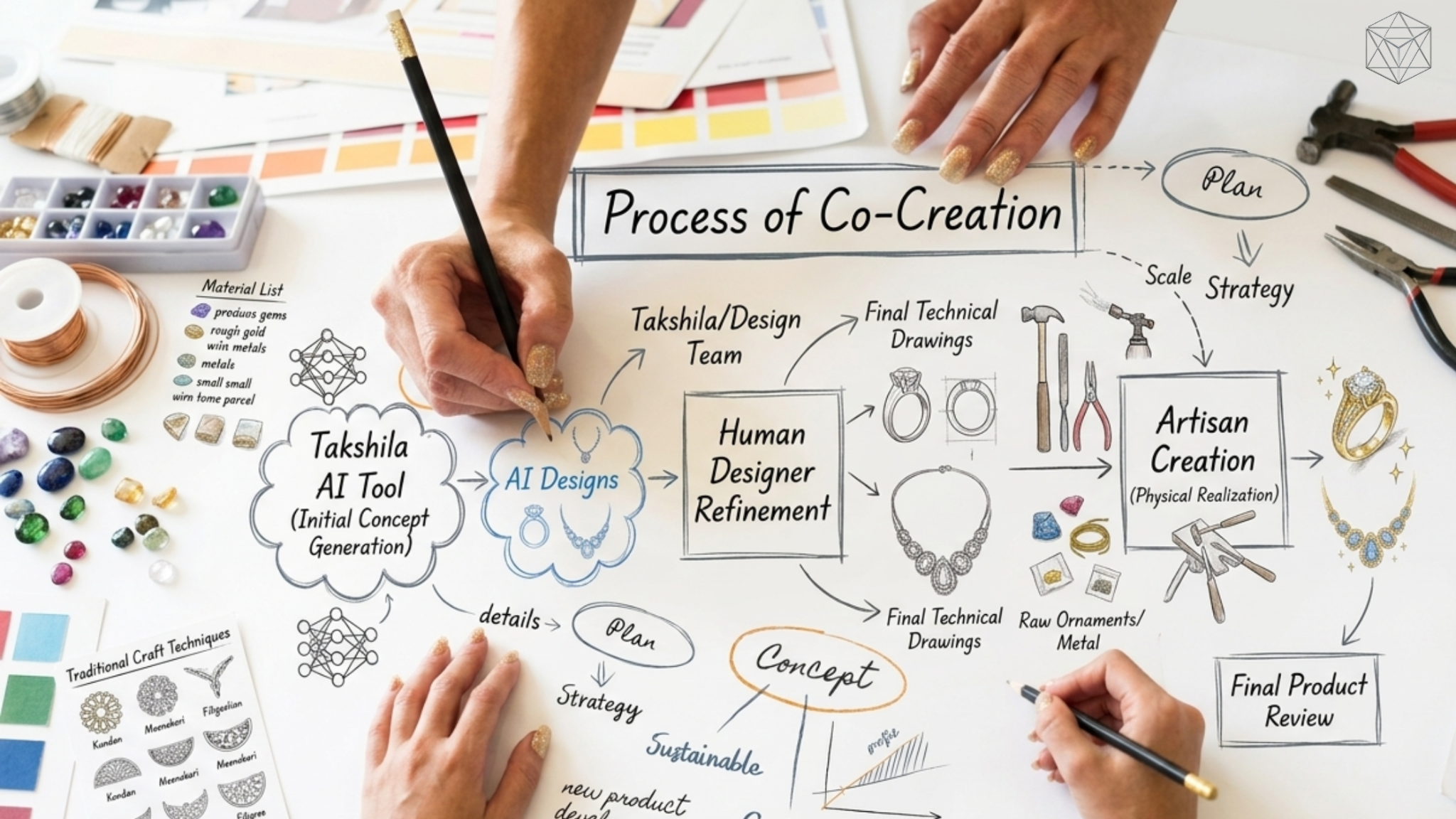
Here is the step-by-step process to co-create a custom product on the platform:
Step 1: Share Your Idea, Story, or Inspiration
Every co-creation journey at Takshila begins with you. There is no brief template to fill, no box to tick. You share your idea, however it comes: a photo, a sketch, a memory, a mood board, or just a few words.
Maybe it is your grandmother's ring you want reimagined. Maybe it is a travel photograph that inspired a necklace. Maybe you simply know the feeling you want to wear.
This open-ended start is intentional. The platform is designed to capture the full emotional context behind what you want, because the best handcrafted products are never just objects. They carry meaning.
Step 2: Collaborate with Designers to Shape the Concept
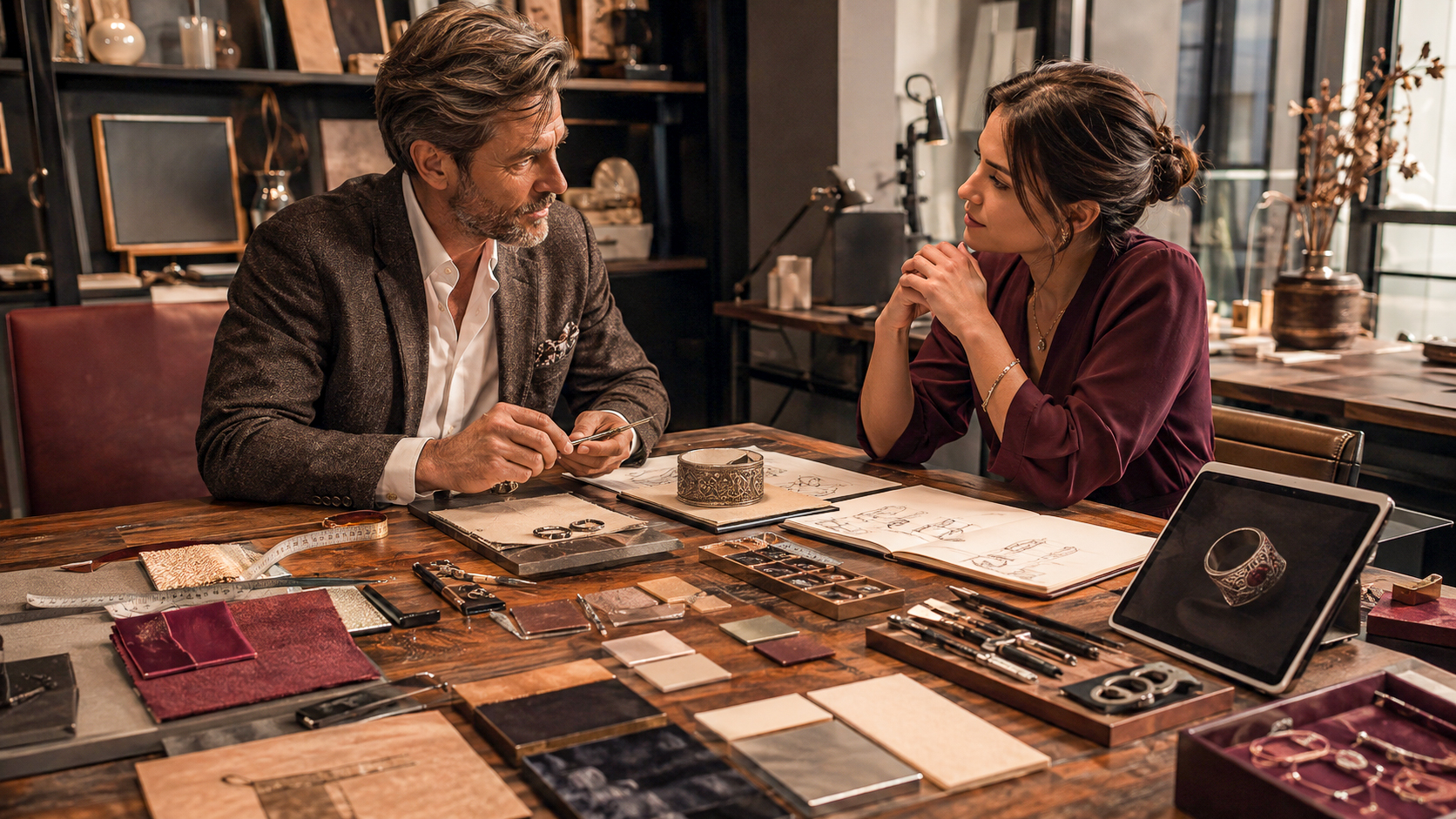
Once your idea is submitted, Takshila connects you with designers who specialise in your chosen category. This is where the design process becomes genuinely collaborative. The designer does not disappear into a studio and return with a finished sketch. You are part of the conversation throughout.
You review early concepts together, share feedback, refine details, and agree on the direction.
Harvard Business Review has highlighted how companies increasingly involve customers in designing products to create more meaningful experiences and generate new forms of value. Takshila takes that idea further by making co-creation the foundation of every product journey.
Step 3: Work Directly with Skilled Artisans
This is where Takshila becomes truly different. Once the concept is agreed upon, you are introduced to the artisan who will make your product. Not a factory. Not a supplier code. A real person with a name, a craft heritage, and a verified profile.
You can message them, ask questions, and understand their techniques. This is artisan-made as it was always meant to be: personal, traceable, and human. Takshila's Community of verified artisans spans multiple craft traditions, ensuring you get access to the best hands for your specific product.
Step 4: Review Designs, Materials, and Specifications
Before a single piece of material is cut or cast, you approve everything. Takshila presents you with a full breakdown of the design, the materials to be used, the finishing techniques, and the cost of each element. This is a transparent supply chain in action; you know exactly what you are paying for and why.
For jewellery, this might mean reviewing the gold grade, the origin of gemstones, and the piece's weight. For textiles, it could mean approving the weave density, dye source, and stitch count. Every decision is yours to make.
Step 5: Follow Your Product's Journey in Real Time
One of the most powerful parts of Takshila's co-fabrication journey is what happens during production. You do not wait and wonder. As the artisan works on your product, you receive real-time updates — photographs, progress notes, and milestone confirmations directly from the workshop.
This is not a tracking number. This is a window into the making of something that belongs to you. You watch your personalized product take shape at every stage.
Step 6: Approve the Final Creation Before Delivery
When the product is complete, the artisan sends you a full set of final photographs and documentation before it is dispatched. Nothing ships without your explicit approval.
This final step protects you completely. Your made-to-order piece must match what you agreed to, down to the last detail.
What Makes the Takshila Co-Creation Process Different?
Some platforms let you order custom products. Some marketplaces list handmade goods. But Takshila occupies a different category entirely, where the buyer, the designer, and the artisan are equal participants in the same act of making.
Here is what sets it apart.
Direct Access to Designers and Artisans
Most luxury products sold online involve at least four layers between you and the maker: the brand, the distributor, the retailer, and the platform.
Takshila collapses all of that. You speak directly to the people who design and make your product. This is not just better service; it changes the nature of what you’re buying.
A ring made by an artisan you have spoken to carries something no mass-produced piece ever can: genuine authorship.
Transparent Pricing and Production
Hidden margins and opaque pricing are endemic to the traditional retail supply chain. At Takshila, the pricing model is open. You see the material cost, the artisan's fee, and the platform's role clearly stated before you commit. This custom craftsmanship model ensures artisans are paid fairly — and that you know exactly where your money goes.
Research shows that 94% of consumers are more likely to be loyal to a brand that offers complete supply chain transparency, while 39% say they are willing to switch to a more transparent brand. Takshila builds this transparency into its co-creation model.
Verified Provenance and Authorship
Every product made through Takshila carries a verified record of its co-creation. The designer's contribution is acknowledged. The artisan's identity is confirmed. The materials are documented. When you receive your piece, you receive its full story — not just the object.
Consumers increasingly question whether brand stories match reality. Research by VOXMEDIA shows that trust today depends on transparency, provenance, and visible proof of how products are made.
Takshila closes that gap by making every stage of creation verifiable, from the designer and artisan to the materials and production journey.
Conclusion
The way we make things is changing, and the way we buy them should too. Takshila is not building a better marketplace. It’s building a relationship between people and the things they own.
When you co-create through Takshila, you are not a customer completing a transaction. You are a participant in something far more meaningful: the act of making something that did not exist before you imagined it.
From the first idea you share to the final approval before delivery, every step of co-creation is designed to keep you informed, involved, and in control.
The result is not just a product. It’s your piece, designed with intention, made with skill, and delivered with complete transparency. Co-create your masterpiece with Takshila's design studio
FAQs
1. How does the Takshila co-creation process work?
You share your idea, collaborate with a designer, work with an artisan, approve the details, track production, and give final approval before delivery.
2. What is the difference between co-creation and customization?
Customization changes an existing product, while co-creation allows you to create a completely new product with designers and artisans.
3. Can I talk directly to the artisan making my product?
Yes. Takshila connects you directly with verified artisans so you can communicate throughout the making process.
4. Can I track my custom-made product during production?
Yes. You receive real-time updates, photos, and progress reports as your product is being created.
5. Why should I choose Takshila for a custom-made product?
Takshila offers direct collaboration, transparent pricing, verified craftsmanship, and complete involvement throughout the creation journey.